
Lovable: review, pricing and alternatives
What is Lovable.dev?
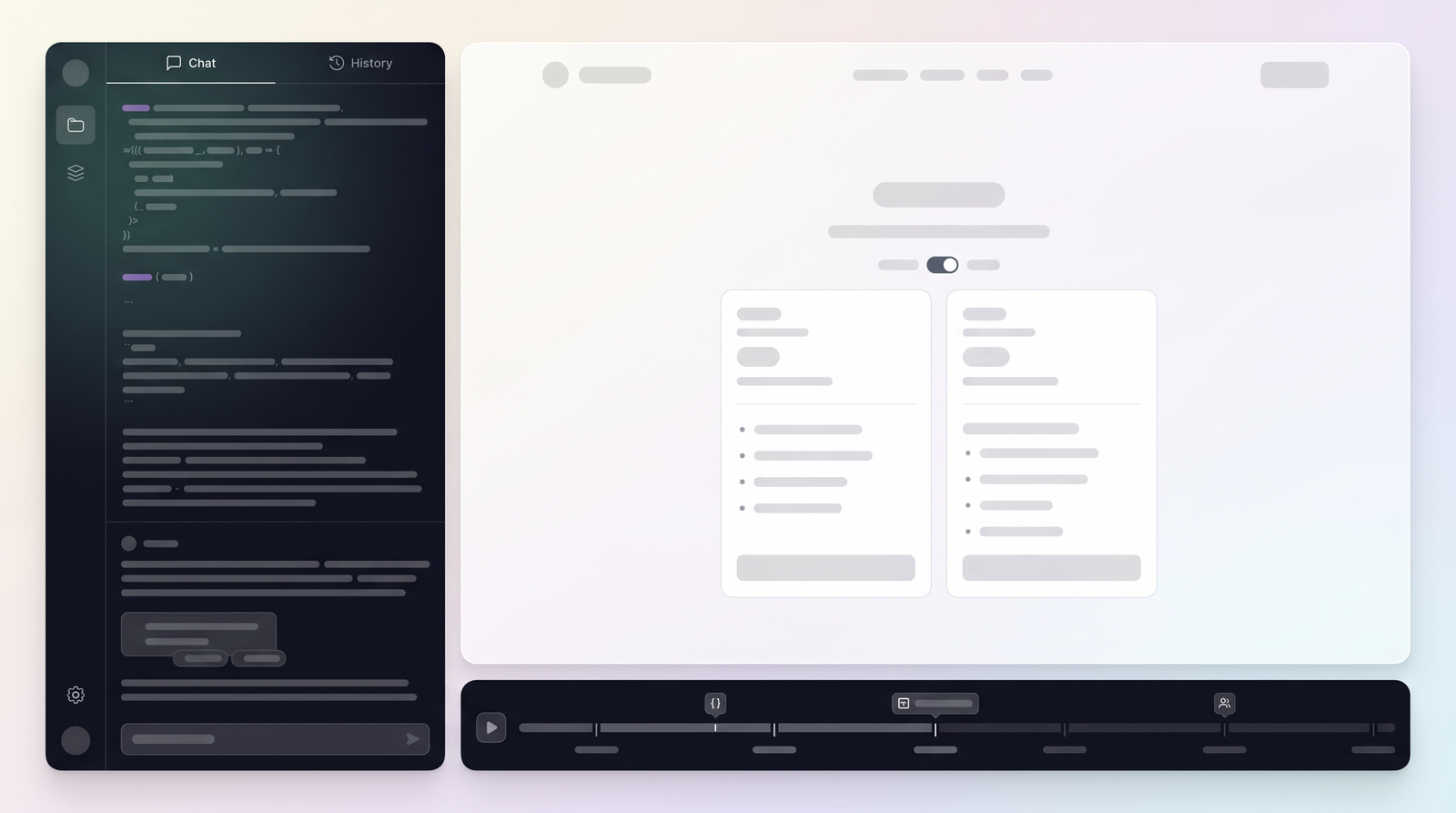
When I first encountered Lovable.dev, the concept immediately piqued my interest. It positions itself as an AI-powered full-stack application builder, a tool designed to bridge the gap between a natural language idea and a fully functional web application, all without requiring you to write a single line of code. Essentially, the promise is that you describe what you want to build in plain English, and Lovable takes that description and generates the complete codebase – from the user-facing frontend to the behind-the-scenes backend and database structure.
Its origin story is quite compelling and gives it a certain pedigree in the AI development space. Lovable evolved from an open-source project called `gpt-engineer`, which gained significant traction, becoming one of the fastest-growing code repositories on GitHub with over 50,000 stars. Initially, `gpt-engineer` was a terminal-based tool for developers, but the creators saw a need to make this powerful concept accessible to a broader audience. This led to the creation of `gptengineer.app`, and eventually, the full rebranding and expansion into what we now know as Lovable.dev.
The core philosophy behind Lovable is what they sometimes call "vibe coding." It's less about meticulous technical specifications and more about capturing the essence or "vibe" of your desired application. The platform aims to act as your "superhuman full stack engineer," taking your high-level vision and translating it into deployable software. This approach is particularly appealing to anyone who has a brilliant app idea but lacks the traditional coding skills to bring it to life, or even experienced developers looking to accelerate their initial setup.
Key Features and Capabilities
What truly sets Lovable apart from simpler website builders is its commitment to generating full-stack applications. This isn't just about static pages; it means Lovable is designed to deliver a complete ecosystem for your web app. When you prompt it, it generates the frontend (what users see and interact with), the backend (the server-side logic that powers your app), and the database (where all your application's data is stored). This comprehensive approach is crucial for building dynamic and interactive web services.
A standout feature that I find particularly valuable is its deep integration with Supabase. Supabase acts as a robust backend-as-a-service, providing critical functionalities right out of the box. This includes user authentication, which is essential for any app requiring logins, and a PostgreSQL database for reliable data storage. Beyond that, Supabase also handles file storage – think user avatars or uploaded documents – and even offers real-time analytics. This means you don't have to worry about setting up these complex services yourself; Lovable brings them together seamlessly.
Lovable also extends its capabilities to include payment processing through Stripe, making it possible to build applications with subscription models or one-time purchases. For those who want to maintain control over their generated code, the GitHub sync feature is a game-changer, allowing you to export and manage your codebase externally. Furthermore, the platform supports custom domains, giving your deployed application a professional and branded online presence. These features collectively aim to provide everything you need to launch a modern web application, from core functionality to deployment and management.
How Lovable Works: From Prompt to App
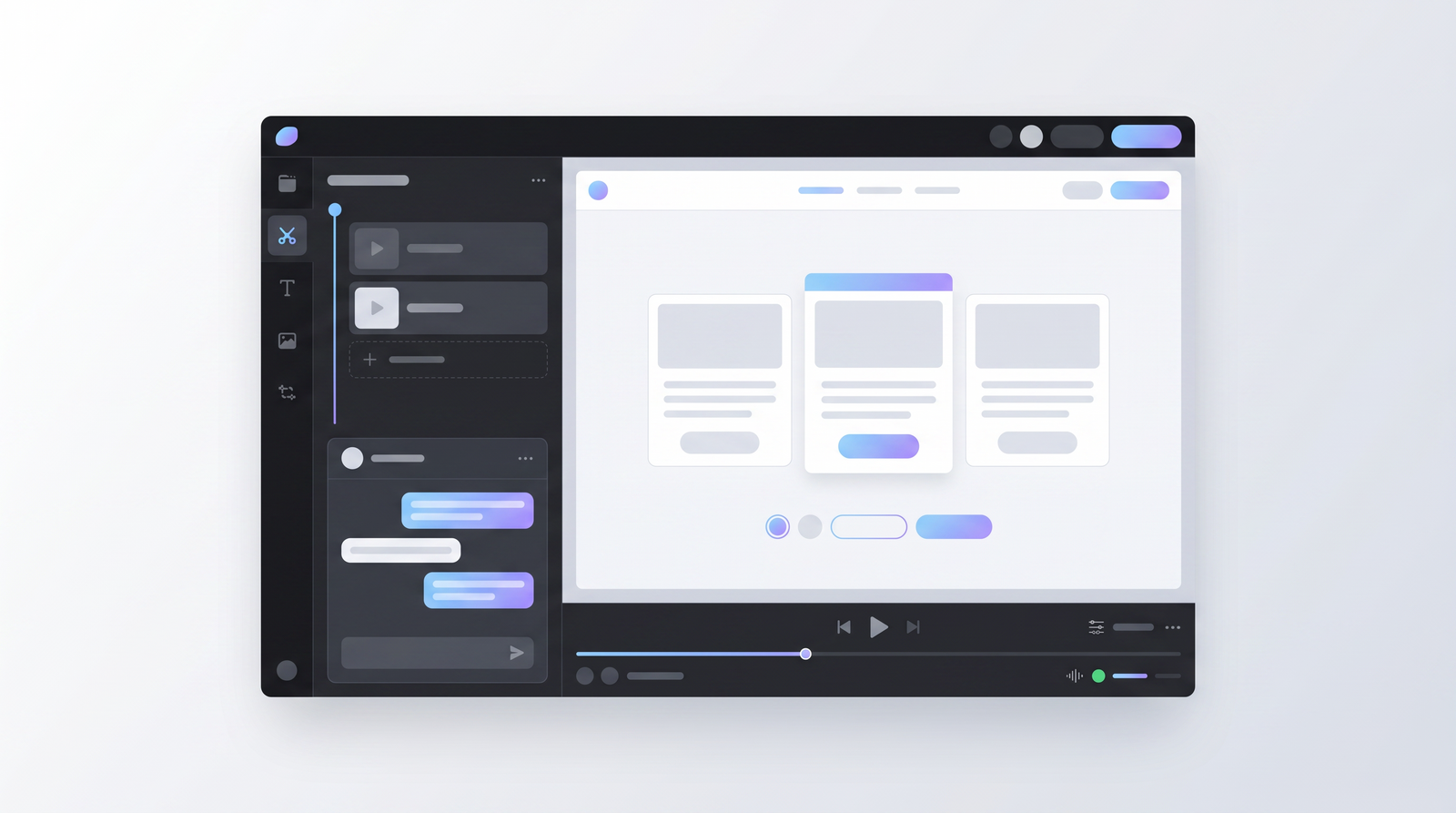
The workflow with Lovable is designed to be remarkably straightforward, echoing the "vibe coding" philosophy. It starts with you, the user, describing your app idea in natural language. Think of it like chatting with a highly skilled, albeit digital, developer. You outline the features, the purpose, and perhaps even the desired look and feel. The more detailed and clear your prompt, the better the initial output tends to be, though it's meant to be iterative.
Once you've articulated your vision, Lovable takes over. It processes your input and begins to generate the application's framework. This isn't just a basic scaffold; it's a fully provisioned tech stack. On the frontend, you can expect a modern setup using React, styled with Tailwind CSS, and bundled efficiently with Vite. This combination ensures a responsive, contemporary user interface. Simultaneously, Lovable provisions the backend code and orchestrates the database, often leveraging the aforementioned Supabase integration for authentication, data storage, and other critical services.
The process is often described as a series of steps: plan, prompt, build a framework, debug, and deploy. The platform handles the heavy lifting of code generation and deployment, aiming for a one-click deployment experience. This means that after Lovable has processed your prompt and built the application, it can be deployed to a live environment with minimal effort on your part. While the initial setup and boilerplate generation are impressively fast, it's worth noting that refining and debugging the AI-generated code to meet exact specifications often requires further interaction and iteration, using up credits in the process.
Pricing, Plans, and the Credit System
Navigating Lovable's pricing structure requires understanding its credit system, which is central to how the platform operates. They offer a free plan that allows you to test the waters, providing 5 credits per day, which translates to a maximum of 150 credits per month. This free tier is excellent for simply exploring the tool, learning its capabilities, and building very small, experimental projects without any financial commitment. It also typically includes 100 GB of hosting bandwidth.
For those looking to build more seriously, Lovable offers paid plans that start around $25-$30 per month. The most popular option for solo builders and those developing Minimum Viable Products (MVPs) is the Pro plan, typically priced at $25 per month. This tier usually includes 100 credits per month, augmented by 5 daily top-ups. These daily top-ups are crucial because they ensure you always have some allowance for active building, even if you exhaust your monthly allocation. This encourages consistent engagement rather than large, infrequent bursts of activity.
Beyond the Pro plan, there's a Business plan, often around $50 per month, which caters to teams and startups. This plan typically offers the same credit allocation as the Pro plan (100 monthly + 5 daily top-ups) but adds essential features like Single Sign-On (SSO) and team workspace functionalities, facilitating collaboration. For larger organizations with specific volume needs, an Enterprise plan with custom pricing is available. The credit system, while offering flexibility, does mean you need to be strategic about how you use your prompts, as debugging and iterating on generated code can consume credits, leading to a potential "hidden cost of debugging" if not managed carefully.
| Plan | Price | Best for |
|---|---|---|
| Free | $0 | Testing, learning, small experiments |
| Pro | $25/month | Solo builders, MVPs, active development |
| Business | $50/month | Teams, startups, collaboration |
| Enterprise | Custom | Large organizations, high volume needs |
Performance, Speed, and Output Quality
One of Lovable's most compelling claims, and often its most praised aspect, is its speed. The platform boasts the ability to build applications up to 20 times faster than traditional coding methods. From my experience and aggregated user feedback, this claim holds true for initial prototyping and getting an MVP off the ground. It's incredibly fast at generating that first working version of your idea, allowing for rapid prototyping and quick validation of concepts. For simple apps, landing pages, or functional prototypes, the speed is genuinely impressive.
However, the conversation around speed often segues into the nuances of output quality. While Lovable excels at rapid generation, the quality of the generated code can be a point of contention. Some users report that the output is robust and functional, creating "functional prototypes that feel real." Others, however, have expressed significant frustration with "complexity and frustrating bugs" in the generated code. This suggests that while Lovable can quickly produce a codebase, it doesn't entirely eliminate the need for human expertise in debugging and refinement.
A recurring criticism I've seen pop up in some user circles is the notion that Lovable sometimes generates what amounts to little more than a `create-react-app` boilerplate. While this might be an exaggeration, it highlights a concern that for more complex or nuanced applications, the AI's output might require substantial manual intervention to transform it from a basic structure into a production-ready, high-quality application. So, while it's a powerhouse for getting started quickly, expect to roll up your sleeves for fine-tuning, especially if your project demands bespoke features or intricate logic.
Pros and Cons: The User Experience
My dive into Lovable's user experience reveals a tool with distinct strengths and notable weaknesses. On the positive side, the speed and ease of use are consistently highlighted as its greatest assets. For non-technical founders or beginners, the ability to translate an idea into a functional web app without writing code is truly empowering. The platform's intuitive, component-based visual editor often means an almost nonexistent learning curve, making rapid MVP creation a tangible reality. Many users, including those with "zero tech skills," have praised its ability to create "beautiful modern websites in minutes." This rapid prototyping capability is invaluable for validating ideas quickly.
However, the user experience isn't without its thorns. The most frequent complaint revolves around the quality of the generated code. While it's fast, the output can sometimes be buggy or overly complex, requiring significant debugging. This can be particularly frustrating given the credit system, as iterating and fixing issues consumes valuable credits, leading to a "hidden cost of debugging." Some users have even reported strong negative experiences, going as far as calling it "garbage" or even "fraudulent" – though these are outliers compared to the generally positive reviews for its prototyping speed.
The credit system itself can be a double-edged sword. While it provides a clear usage metric, it also necessitates a strategic approach to building. You can't just endlessly prompt without considering the cost. This means that while Lovable excels at initial generation and simple projects, its limitations become more apparent when tackling complex applications that demand intricate logic or extensive customization. It's a tool that clearly accelerates prototyping but doesn't completely remove the need for human oversight or expertise, especially as projects mature.
- Pros:
- Exceptional speed for prototyping and MVPs
- Easy to use, even for non-technical users
- Generates full-stack applications with modern tech
- Good for validating ideas quickly
- Integrates key services like Supabase and Stripe
- Cons:
- Generated code can be buggy or require significant refinement
- Credit system can be limiting for complex projects
- Not a replacement for experienced developers
- Some users report a basic output that needs heavy customization
Who is Lovable Best For? Use Cases
Based on my observations and the collective feedback, Lovable truly shines for specific user profiles and project types. At the top of that list are non-technical founders. If you have a brilliant app idea but lack the coding chops, Lovable offers an unprecedented way to get a Minimum Viable Product (MVP) up and running. This means you can validate your concept, gather initial user feedback, and even attract early investment without investing heavily in a development team or learning to code yourself. It's about bringing an idea to life quickly and affordably.
Another prime audience is product managers and designers. For them, Lovable is an excellent tool for creating functional prototypes that go far beyond static mockups. Instead of showing a client or stakeholder a Figma design, you can present a clickable, working application that feels real. This allows for more accurate user testing and a clearer understanding of the product's flow and functionality, accelerating the design and iteration cycles significantly. Imagine quickly generating a functional dashboard or an interactive user flow.
Finally, even experienced developers can find value in Lovable, particularly for boilerplate setup. We all know the tediousness of setting up a new project – configuring the frontend, backend, database, and authentication. Lovable can handle this initial grunt work in minutes, freeing up developers to jump straight into the more interesting, complex, and unique aspects of their projects. It's not about replacing developers, but about augmenting their productivity by automating the foundational tasks, allowing them to focus on the core innovation.
Lovable Alternatives and Comparisons
The landscape of AI-powered app builders and no-code platforms is rapidly expanding, and Lovable certainly isn't operating in a vacuum. When I look at its position in the market, it's clear there are several other tools vying for similar users, each with its own approach. Competitors like Bolt.new and Base44 offer similar promises of turning ideas into applications with AI assistance. Bolt.new, for instance, is another browser-based AI agent that can code entire projects from prompts, much like Lovable. Then there are platforms like Replit, which also integrates AI coding assistance but often targets developers more directly, providing an integrated development environment (IDE) with AI capabilities.
Beyond these direct competitors, you also have tools like V0, which focuses on generating UI components, and more traditional no-code platforms that offer visual drag-and-drop interfaces without AI code generation. What distinguishes Lovable is its emphasis on full-stack generation from natural language, moving beyond just UI or static sites to create a complete, deployable application with integrated backend services. While some AI tools act more like coding assistants (think GitHub CoPilot or VSCode forks like Cursor and Windsurf), Lovable aims to be the "AI Fullstack Engineer" that builds the entire project.
So, where does Lovable fit in? It positions itself as one of the most capable AI app builders for creating full-stack web applications without traditional coding. It's a blend of no-code ease-of-use with the power of code generation, aiming to fill the gap between simple website builders and complex development environments. When considering alternatives like Bolt.new or Base44, you can see how Lovable stacks up against them on Top10k, offering a unique blend of speed, full-stack capability, and natural language interaction.
The Verdict: Is Lovable Worth It?
After exploring Lovable's capabilities, its strengths, and its limitations, the verdict isn't a simple yes or no; it's nuanced and depends heavily on your specific needs and expectations. Does Lovable deliver on its core promise of turning natural language into web apps without coding? For initial prototyping and generating Minimum Viable Products, absolutely. It excels at getting a functional, full-stack application off the ground with remarkable speed, far outpacing traditional development methods for early-stage projects. This rapid prototyping is its strongest value proposition, especially for non-technical founders and product managers.
However, it’s crucial to manage expectations. Lovable is not a magic bullet that completely replaces the need for human expertise, especially for complex or production-grade applications. While it generates a modern tech stack (React, Tailwind, Supabase), the quality of the generated code can vary, sometimes requiring manual debugging and refinement. The credit system also means that extensive iteration or fixing complex issues can add up, making it less cost-effective for highly intricate projects that demand bespoke solutions or deep custom logic.
So, is it worth it? For a non-technical founder looking to validate an idea with a functional MVP, or a product manager needing a realistic prototype, the answer is a resounding yes. The Pro plan, at around $25/month, offers significant value for its ability to accelerate initial development. For experienced developers, it's a fantastic tool to quickly spin up boilerplate code and bypass tedious setup. But if you're expecting a flawless, production-ready application for a complex enterprise solution without any human intervention, Lovable, like many AI app builders, still has room to grow. It delivers real value by making the initial leap from idea to app incredibly efficient, but it's best viewed as a powerful assistant rather than a complete replacement for a development team.
Full profile and live ranking: https://top10k.com/ai/lovable
Published by

Top10k Tools stands as a free online platform featuring thousands of free online tools built to get things done faster.
The platform covers everything from SEO and coding to file converters, image tools, and handy calculators. Everything works directly online, making them quick to access anywhere.
Top10k Tools is working toward reaching 10,000 useful web tools people actually need.
For anyone who works online, the right tool is just a click away. Start using the tools today.
Frequently asked questions
What is the core promise of Lovable.dev?
Lovable.dev promises to transform natural language descriptions into fully functional, full-stack web applications without requiring users to write code. It aims to accelerate the app development process significantly, particularly for prototyping and MVP creation.
What kind of apps can Lovable build?
Lovable can build full-stack web applications, complete with a React/Tailwind CSS frontend, a backend, and a Supabase-integrated database for authentication, data storage, and file handling. It's suitable for MVPs, functional prototypes, simple web apps, and landing pages.
How does Lovable's credit system work?
Lovable uses a credit system where actions like generating code consume credits. The free plan offers daily credits, while paid plans provide a monthly allocation plus daily top-ups. This system requires strategic usage, as debugging and iteration also consume credits.
Is there a free plan available for Lovable.dev?
Yes, Lovable offers a free plan that typically includes 5 credits per day (up to 150/month) and 100 GB of hosting bandwidth. This plan is ideal for testing the platform, learning its features, and building small, experimental projects.
What are the main criticisms of Lovable?
The primary criticisms often revolve around the quality of the generated code, which can sometimes be buggy or require significant manual refinement. Additionally, the credit system can be limiting for complex projects, and some users feel the output can be basic boilerplate.
Who would benefit most from using Lovable?
Lovable is best for non-technical founders needing to validate MVP ideas quickly, product managers and designers creating functional prototypes, and developers looking to rapidly set up boilerplate code. Its speed makes it invaluable for initial project acceleration.
How does Lovable compare to traditional coding?
Lovable claims to build apps up to 20 times faster for initial stages, significantly reducing the time from idea to a functional app. However, traditional coding offers greater control, customization, and often higher quality for complex, production-ready applications without the debugging overhead of AI-generated code.
Can Lovable replace a human developer?
While Lovable is a powerful tool for accelerating development and enabling non-coders, it does not fully replace a human developer. It excels at generating initial structures and prototypes, but complex logic, bespoke features, and thorough debugging often still require human expertise and intervention.